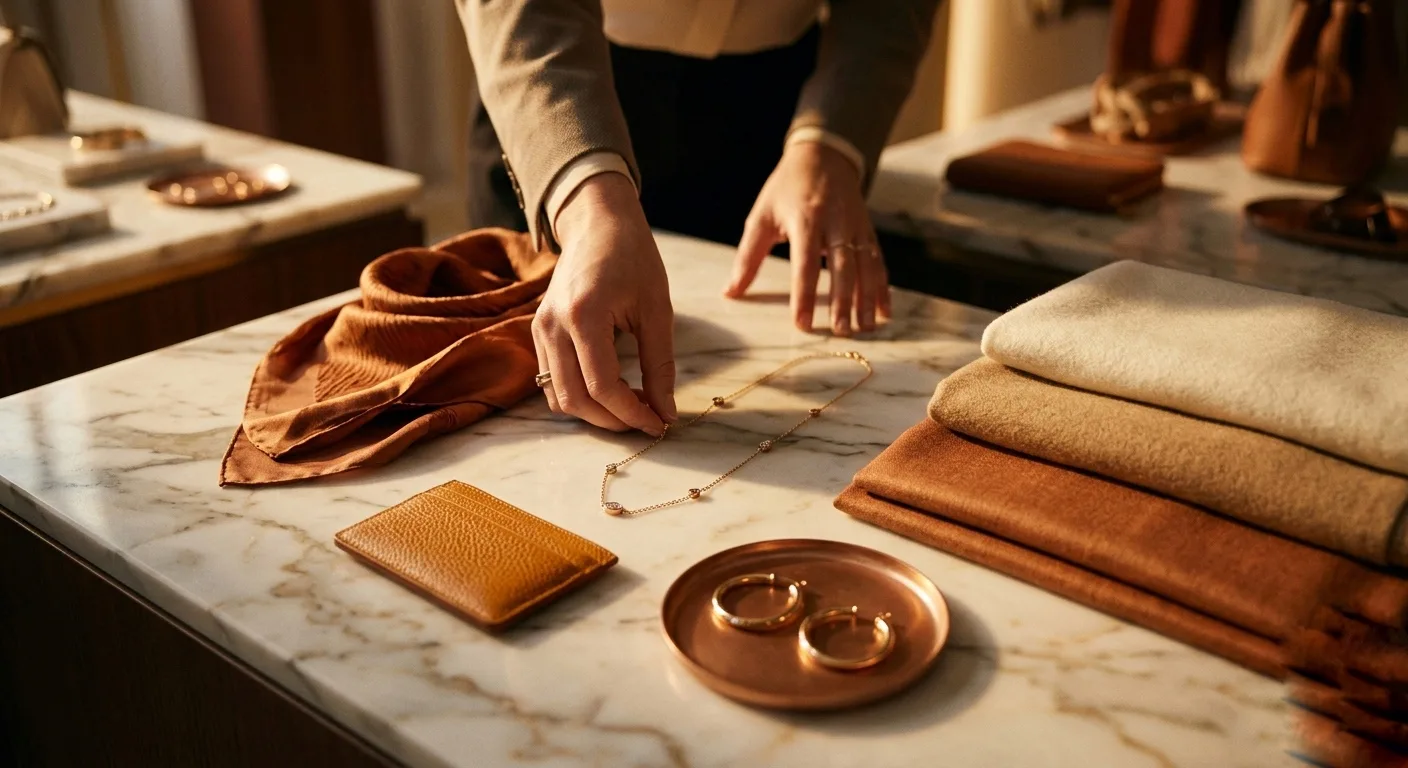
You are walking through a mall. Not shopping, not looking for anything specific. Maybe killing time. Maybe heading somewhere else entirely. And then you stop. Something in a window caught your eye -- a color, a shape, an arrangement of objects that triggered a feeling you cannot quite name. You walk in. You were not planning to. But someone decided you would.
That someone is a visual merchandiser. And unless you work in retail, you have probably never heard of them.
The Silent Architects of Desire
Visual merchandising is the art of making you want something before you know you want it. It lives in the space between interior design and psychology, between commercial strategy and pure aesthetics. A great VM does not decorate a store. They choreograph an experience. They control where your eye travels, what you touch first, how long you linger, and whether the space makes you feel aspirational or intimidated or at home.
The best ones are invisible. You never notice the work. You just feel the result. That is the paradox of the craft -- the better they are, the less you see them.
Why One Display Stops You and Another Doesn't
There is a science to it, but it starts with intuition. Color theory, proportion, focal points, negative space -- these are the tools. But the decision of which shoe to place at eye level, which fabric to drape rather than fold, which lighting angle creates warmth rather than clinical brightness -- that is taste. And taste cannot be taught. It can be refined, sharpened, exposed to better references. But the instinct is either there or it is not.
A display that works tells a micro-story in three seconds. It does not explain itself. It does not need a sign that says "New Collection." The arrangement itself communicates newness, desirability, seasonality. The mannequin is not wearing an outfit; it is embodying a mood. The props are not decorative; they are contextual. A stack of vintage suitcases next to a linen blazer says "summer in Positano" without a single word.
AI can suggest a layout. It can analyze foot traffic and optimize product placement. But it cannot make you feel something when you look at a window. That is still human.
The Pressure of a New Season
Four times a year -- sometimes more in fast fashion, sometimes aligned with Resort and Pre-Fall in luxury -- the entire visual identity of a store changes. New merchandise, new color palette, new campaign imagery, new props. The VM team has a window of hours, usually overnight, to transform a space that generates millions in revenue.
The pressure is immense and largely invisible to the shopping public. By the time the doors open the next morning, every surface, every hanger, every lighting cue must be flawless. There is no soft launch. There is no "we'll fix it later." The store opens and the display either works or it does not, and you find out immediately by watching whether people stop or walk past.
GCC Mall Culture: Where VM Is a Competitive Sport
Nowhere on earth takes visual merchandising more seriously than the Gulf. The malls here are not shopping centers -- they are entertainment destinations, social spaces, cultural landmarks. Families spend entire evenings in them. Tourists build their itineraries around them. The competition for attention between storefronts is fierce and unrelenting.
A luxury boutique in The Dubai Mall or Villagio in Doha or The Avenues in Kuwait is not just competing with the store next door. It is competing with an ice rink, an aquarium, an indoor theme park, and a food hall that could rival anything in London or Tokyo. The window has to be extraordinary. Not good. Extraordinary.
This is why GCC-based VM roles are some of the most sought-after in the industry. The budgets are bigger. The expectations are higher. The creative freedom -- within brand guidelines -- is often greater than anywhere else because the stakes demand it. Brands know that in this market, the visual experience is not supplementary. It is primary.
The Craft Is Not Going Anywhere
Every few years, someone predicts that physical retail is dying and, by extension, so is visual merchandising. Every few years, they are wrong. E-commerce is enormous and growing. But the physical store is not disappearing -- it is evolving into something closer to a gallery, a showroom, an experience. And that evolution makes the VM role more important, not less.
The person who decides whether you walk in or walk past is not a salesperson. They are not an algorithm. They are a craftsperson who understands something that technology has not cracked and may never crack: how to make a human being feel something in three seconds, using nothing but objects, light, and space.
That is a rare skill. And right now, the Gulf cannot get enough of it.