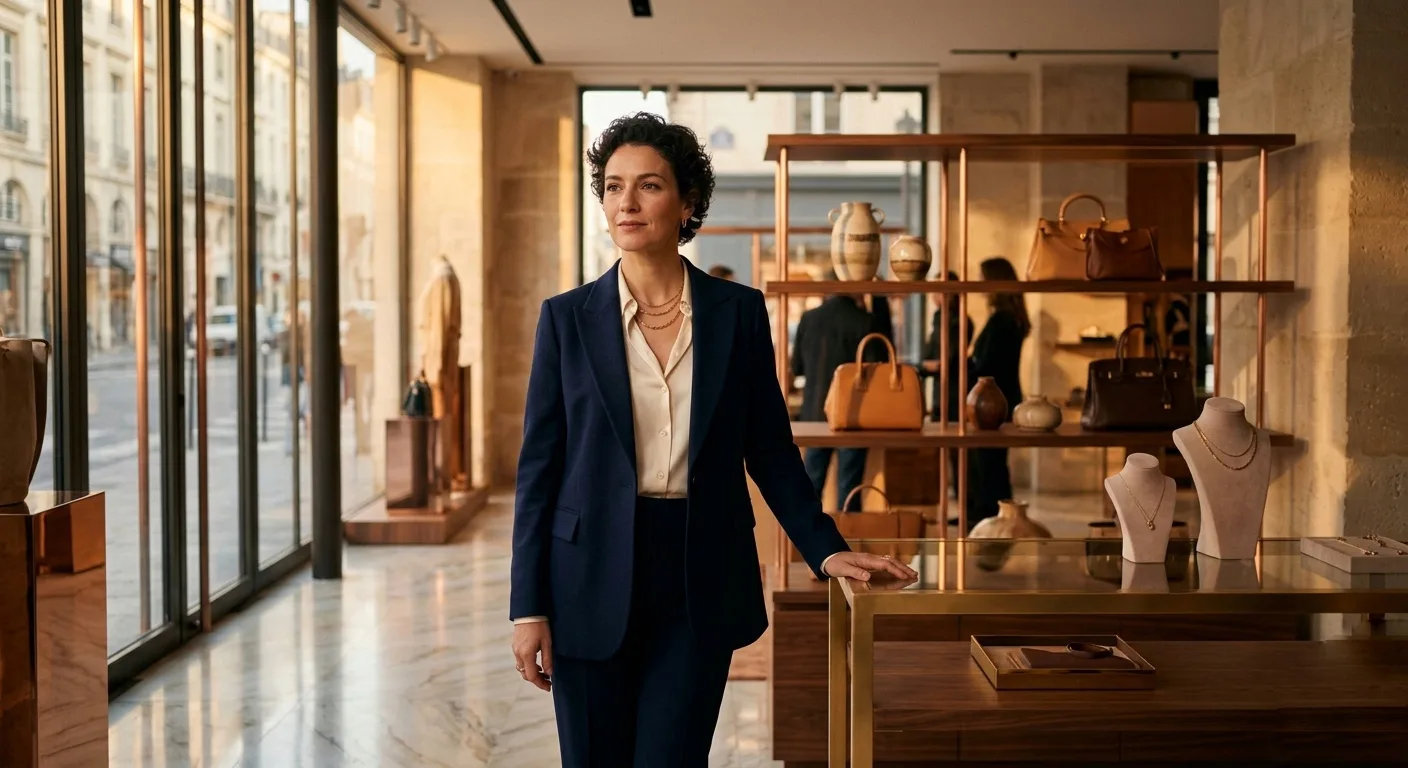
Let's get this out of the way. If your retail experience tops out at folding jeans under fluorescent lighting and hitting daily KPIs on a headset, you are not ready for luxury. You might be brilliant at what you do. You might be the best closer on the floor. But luxury retail operates on a completely different frequency, and confusing the two is the fastest way to get your application binned by someone who knows the difference.
This is not snobbery. This is reality. And if you want to work in the GCC's exploding luxury market -- where brands are opening flagships faster than they can find the right people -- you need to understand what that reality actually looks like.
The Transaction Is Not the Point
In mass-market retail, the sale is the goal. Everything is optimized for conversion: the layout, the music, the placement of impulse buys near the register. You are a cog in a machine designed to move product. And that machine works beautifully. No shade.
But luxury is not trying to move product. Luxury is trying to create a feeling. The sale is a byproduct of something much harder to manufacture: trust, desire, and a sense of belonging. A client walking into a Cartier boutique in The Dubai Mall does not need to be sold. They need to be seen. They need their name remembered. They need their preferences anticipated before they articulate them.
The best luxury associates are not salespeople. They are hosts. They are relationship managers. They operate more like a private banker than a shop assistant. If that distinction does not immediately resonate with you, luxury might not be your lane -- yet.
The Team Is a Family, Not a Shift Roster
High-street retail schedules people like interchangeable parts. You clock in, you cover the floor, you clock out. Someone else fills the gap. The system is designed for turnover because turnover is expected.
Luxury houses do not work this way. A boutique team in Riyadh or Abu Dhabi might be six to ten people, and they function like a family unit. Everyone knows each other's clients. Everyone covers for each other instinctively. The Store Director is not a shift manager -- they are the custodian of the brand's reputation in that city. The visual merchandiser is not rotating mannequins; they are interpreting the Maison's seasonal narrative for a local audience.
In luxury, you do not get hired for a position. You get invited into a culture. And if you do not respect that culture, it will reject you.
Loyalty matters. Longevity matters. The expectation is that you stay, you grow, and you build something. The revolving door of fast fashion is the opposite of what luxury brands want.
The GCC Is the Fastest-Growing Luxury Market on Earth
This is not hyperbole. The Gulf is where luxury is placing its biggest bets. Saudi Arabia's Vision 2030 is reshaping the kingdom into a retail and entertainment destination that is pulling serious brand investment. The UAE continues to expand beyond Dubai into Abu Dhabi, Al Ain, and Ras Al Khaimah. Qatar is building entire retail ecosystems around Lusail and The Pearl.
What this means: there are more roles opening than there are qualified people to fill them. And "qualified" does not mean you worked at Zara for three years and have nice handwriting. It means you understand clienteling software. It means you can hold a conversation with someone whose net worth exceeds your annual salary by several orders of magnitude -- and make them feel comfortable, not impressed.
Brands in the GCC want people who understand local customs, who can navigate the nuances of serving royalty and ultra-high-net-worth families, who speak Arabic or are willing to learn. They want emotional intelligence, not just product knowledge.
So What Does This Mean for You?
If you are coming from high-street retail and want to make the jump, be honest about the gap. It is not a gap in your intelligence or your work ethic. It is a gap in exposure. You have not been trained to think about retail as theater. You have not been taught to build multi-year client relationships. You have not operated in an environment where a single misstep with a VIP can cost the store a six-figure annual spend.
Start by studying the craft. Read about the history of the houses you want to work for. Understand what clienteling actually means -- not the CRM software, but the philosophy behind it. If you can, get into a bridge brand first. Something between high street and haute. Build the muscle memory.
And if you are already in luxury and considering a move to the Gulf, now is the time. The market is hungry. The packages are competitive. The lifestyle is extraordinary. But only if you come correct.
Luxury retail is not retail. It is something else entirely. And the people who thrive in it are the ones who understood that from the start.